Every startup has one: the photo. Six people squeezed around a wobbly table in a too-small office, pizza boxes stacked like architecture, a whiteboard behind them full of ideas that half worked and half didn't. Someone prints it, someone else frames it, and then it ends up — where? On a shelf behind the monitor, slowly fading, or in a shared drive nobody opens. The moment that built the company deserves better than that.
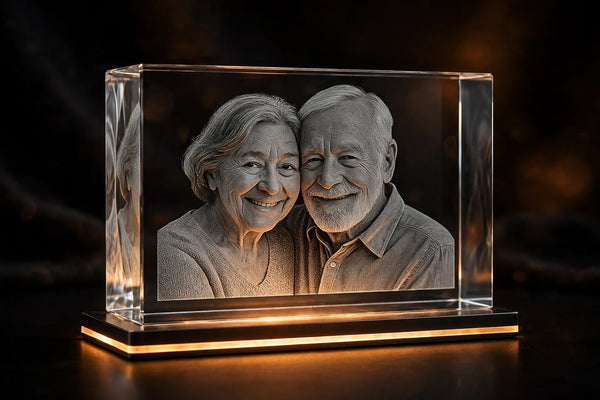
A 3D crystal engraved with your team photo doesn't fade, crease, or get buried under paperwork. The faces of the people who were there on day one — or day one hundred — stay suspended inside a block of crystal, glowing softly on a desk. It is the rare team gift that nobody quietly regifts.
This guide walks through why most team gifts fail, which moments are actually worth capturing, how to pick a photo that engraves well, and how to order for a team without the last-minute scramble.
Why do most team gifts end up forgotten in a desk drawer?
Think back to the last team gift you received at work. The branded mug. The gift card in a standard envelope. The plaque with your name spelled almost right. Where is it now? If you're honest, you probably can't picture it. Most corporate gifts fail for one simple reason: they're designed to be given, not kept. A mug is a vessel. A gift card is a transaction. Neither one says anything about the people who shared the work.
A team photo crystal flips that logic. It isn't a token handed out at an all-hands meeting and forgotten by Friday. Every recipient gets a personal artifact: the actual faces of their team, engraved in 3D inside solid crystal. It goes on the desk, not in the drawer — because it is, quite literally, a picture of people they like.
Startups and small teams feel this difference most. In a team of eight, every hire changes the chemistry. A crystal of the founding crew — or the crew that survived the first chaotic year — is a small monument to something real. It costs less than a dinner out per person and lasts longer than the company t-shirt, which will shrink by summer.

Which team moments are actually worth capturing?
Not every sprint retrospective needs a monument. The trick is picking the moments people will still care about in five years. In our experience, four kinds of moments always land.
The founding team. The photo taken before the logo existed. If you're lucky enough to have it, engraving it is almost an obligation — it's the origin story, and it gets harder to gather everyone in one frame with every passing quarter.
The first real office. Moving out of the garage, the coworking desk, or the kitchen table is a milestone nobody celebrates properly. A crystal of the team in the new space marks the transition from "project" to "company."
Funding and launch milestones. The team photo from launch day or the week the funding closed. These are the photos that end up in the pitch deck's history slide years later — better that they exist in physical form too.
Farewells. This one is underrated. When a key early hire moves on, the standard sendoff is a card everyone signs in a hurry. A 3D crystal with the team photo — the one they're in — is the farewell gift that doesn't feel corporate. It's personal because it literally contains their people.
Anniversaries count too: the five-person team that became fifty, or the one-year mark of the scrappy crew that got you there. The rule of thumb is simple: if the photo makes everyone in the room laugh and go quiet at the same time, it's crystal-worthy.
What makes a group photo engrave well in 3D crystal?
Here's the honest truth about 3D engraving: the crystal can only work with what you give it. A blurry team selfie from across the room will engrave as a blurry memory. But you don't need a studio shoot — you need a few practical choices.
Pick the highest-resolution version you can find. The original phone photo beats the copy someone forwarded on a messaging app (compressed, again and again). Ask whoever took the photo for the original file before you do anything else.
Face size matters more than total megapixels. In a group of twelve shot from ten feet away, each face is a postage stamp. The engraving reproduces exactly that. A photo where every face is clearly visible — roughly thumb-sized on your phone screen — engraves beautifully.
Good light helps enormously. The engraving reads faces as a grey 3D relief, so harsh shadows and dark sunglasses hide detail. Daylight, faces toward the camera, minimal background clutter: that's the formula. A decent lunch-break team photo outside the office front door usually outperforms an expensive indoor shot with a flash.
One more practical note: the engraving is monochrome grey, so choose a photo that works in black and white. If the photo looks strong converted to greyscale on your phone, it will look strong in crystal. If everyone blends into a dark background, pick another shot.
Why do group photos need a larger crystal format?
This is the single most common mistake with team orders: someone uploads a twelve-person group photo and picks the smallest crystal. Every face becomes a dot. The fix is not complicated, but it's worth understanding.
A 3D engraving places thousands of tiny points inside the glass to build the image. A group photo has a dozen faces competing for that detail budget. The larger the engraving surface, the more room each face gets — and the more the result looks like your team instead of a crowd.
For team photos of six or more people, the wide rectangle format is the reliable choice. The XL Rectangle measures 4 × 6 × 3 inches — a generous horizontal surface that gives a group shot the space it needs, and it sits naturally on a desk or shelf. Landscape orientation matches how team photos are actually taken: people side by side, not stacked.
Smaller formats are perfect for one or two faces — a founder portrait, a mentor, a pair of co-founders. But the moment you have a row of six or more, size is the difference between a gift and a paperweight. If you're choosing between formats, always go one size up for group shots.
How do you order crystals for a whole team without the last-minute scramble?
Ordering one personalized gift is easy. Ordering eight — for a farewell dinner next Friday — is where plans fall apart. The logistics are simple if you start early and keep the process boring.
Step one: lock the photo now, not next week. The most common delay isn't engraving, it's the photo. Someone has to pick the shot, confirm everyone looks acceptable in it (yes, this matters), and send the original file. Do this first and everything downstream gets easier.
Step two: decide whether everyone gets the same crystal or a personal variant. Same photo for everyone is the classic team move — the shared artifact. A personal variant (each person's favorite team moment) takes more coordination but lands harder. For a first team order, go with the shared photo; you can always personalize later orders.
Step three: leave yourself a buffer. Each crystal is engraved to order, and custom work takes time. Ordering a week or two before the date beats the panicked two-day window every time. If the gift is for a specific event, count backward and order early — future-you will be grateful.
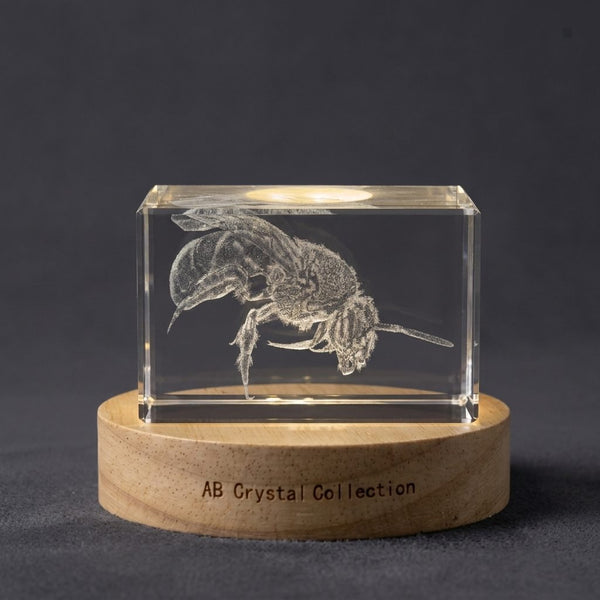
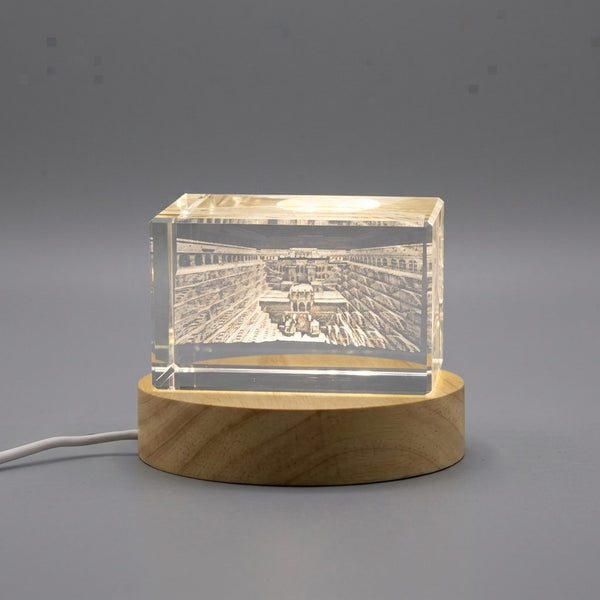
A small display detail that makes a real difference: a lit base. The engraving catches light beautifully, and a wooden LED base turns a desk crystal into a small glowing centerpiece. It's the kind of upgrade that costs little and changes the whole presentation.

What about the people who aren't on the team photo?
Teams don't build companies alone. The mentor who took the founder's calls at midnight. The first client who trusted an unproven team. The partner whose firm gave you the introduction that changed everything. These relationships deserve the same treatment — and a crystal works here too, just with a different photo.
For a mentor or advisor, the right image might be a photo from a conference, a dinner, or the day they joined the advisory board. A personal 3D photo crystal is a thank-you that says "you were part of this" — which is exactly what the best mentors want to hear.
For a founding client, consider the photo from the launch event, the first site visit, or the handshake that started it. It's unusual, it's memorable, and unlike a branded gift basket, it won't be forgotten by Monday.
The principle is the same across all of these: people keep objects that contain people. A crystal with a face in it is never generic, because no two teams — and no two thank-yous — look alike.
Frequently asked questions
Can I use a phone photo for a team crystal?
Yes, as long as it's the original, full-resolution file. A modern phone photo in daylight works beautifully. Avoid screenshots, forwarded copies, and heavily filtered versions — every compression step loses detail the engraving needs.
How many people can fit in one crystal?
There's no hard limit, but face size is the real constraint. For groups of six or more, choose a larger wide format like the XL Rectangle (4 × 6 × 3 inches) so every face stays recognizable. If you're unsure, the photo crystal collection lets you compare sizes before deciding.
Can I add text, like the company name or a date?
Yes — the XL Rectangle supports optional text etching, so you can add a company name, milestone date, or short line beneath the engraved photo. Keep it short: one line reads as elegant, a paragraph reads as a plaque.
How far ahead should I order team gifts?
Each crystal is engraved to order, so leave a comfortable buffer — a week or two before the event is a safe rule. The biggest time sink is usually picking and approving the photo, so lock that down first and the rest moves quickly.
Key takeaways
- Most team gifts fail because they're designed to be given, not kept — a crystal with your team's faces is kept on the desk, not in the drawer.
- The best moments to capture: the founding team, the first office, funding or launch milestones, and farewells.
- Use the original, full-resolution photo — compressed copies lose the detail the engraving needs.
- Group shots of six or more need a larger format — the XL Rectangle's 4 × 6 × 3 inch surface gives every face room.
- Order a week or two before the event, and lock the photo choice first — that's where most delays happen.
- A wooden LED base ($39.99) turns the crystal into a glowing desk centerpiece.
The bottom line
Startups run on moments. The all-nighter before launch, the first office key, the dinner where the early team said goodbye to the one who was there from day one. Those moments live in photos — and photos fade, get lost, or sink to the bottom of a shared drive. A 3D crystal keeps one of them exactly as it was, in solid form, on the desks of the people who lived it.
You don't need a big budget or a corporate gifting program. You need one good team photo, a format big enough to hold it, and enough lead time to do it right. The rest — the reaction when someone unwraps their own team, glowing in crystal — takes care of itself.
Teams change. The photo doesn't have to fade. Browse the full range of personalized crystal gifts and find the one your team will still have on their desks in ten years.