There is a photograph you have been meaning to take — and every family has one version of it. It is not the posed holiday picture. It is the quiet one: your grandmother's hands, flour-dusted, shaping dough the way she always has. Your grandfather's hands, knuckles thick from decades of work, resting on the arm of his chair. This is the guide to capturing that image in crystal — before the hands are gone, and while the moment still feels like an ordinary afternoon.
At some point it happens quietly. You are watching your grandparents do something completely ordinary — shelling peas, mending a shirt, holding a grandchild's tiny fingers — and you notice their hands. Not in a sad way. Just a real one. These are the hands that carried you, fed you, fixed everything that broke in your childhood. And one day, like most adult children, you will want something more than a posed portrait to remember them by.
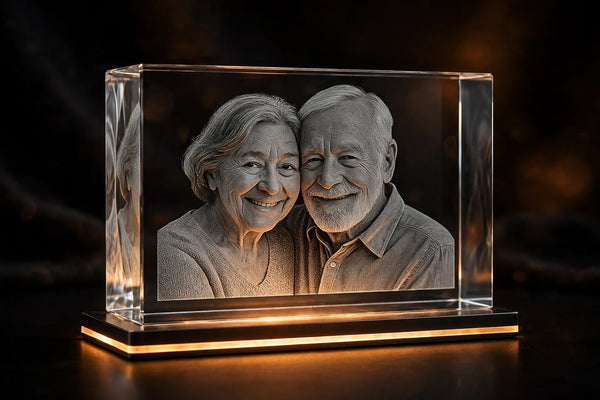
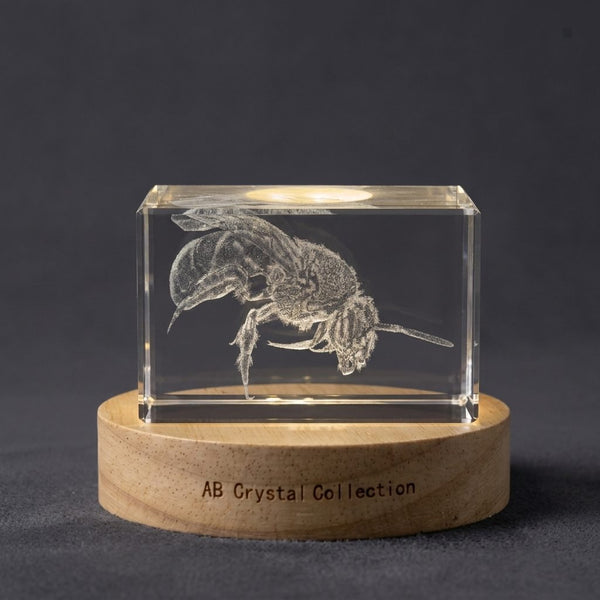
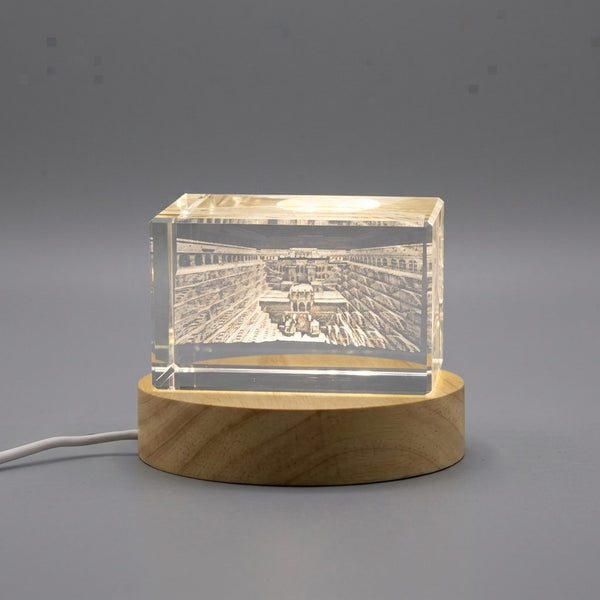
A 3D crystal keepsake turns a photograph of those hands into something you can hold: the image is laser-engraved inside solid K9 crystal, not printed on the surface, so it will not fade, peel, or yellow. Families who have done it rarely say they wish they had waited. Here is how to do it well — the photo to take, the conversation to have, and how to choose the right crystal for the memory.
Why do grandparents' hands tell a truer story than their faces?
Faces change, and we take hundreds of photos of them. Hands are different. A grandmother's hand carries the map of everything she did for the people she loved: the slight bend of a finger, the pale line where a wedding band sat for fifty years, the small burn scar from a lifetime of cooking. You cannot stage that. You can only notice it.
That is why a hands portrait works so beautifully as a keepsake. It is intimate without being intrusive, and it ages gracefully — a pair of work-worn hands looks as moving on a shelf in ten years as it does today. The engraving is carved inside the crystal with a laser, down to the detail of individual wrinkles. Photographs flatten; a 3D-engraved crystal seems to hold the hands in a quiet, glowing space.
There is also a practical truth: grandparents who are shy in front of a camera almost never refuse when you ask about their hands. Ask a proud man of eighty to sit for a portrait and he will squirm. Ask him if you can photograph the hands that built the family home, and he will usually smile and oblige. The subject is flattered, not embarrassed.
How do I photograph my grandparents' hands beautifully?
You do not need a professional camera. A modern phone is enough, provided you follow a few rules that make the difference between a snapshot and an engraving-worthy image.
First, use soft natural window light and shoot from arm's length (about 60–90 cm). Direct flash is the enemy — it washes out the wrinkles and texture that make the image moving. Late morning light through a window is ideal. Let the hands be relaxed: holding a cup of tea, resting on a table, one hand gently over the other. Stiff, posed hands look staged; relaxed hands tell the truth.
Second, keep the background simple and dark if you can. The crystal engraving reads best from a high-contrast source photo, so a dark tablecloth or a plain dark sweater sleeve behind the hands gives the laser software clean edges to work with. Shoot in high resolution — the largest file your phone produces. A blurry source photo becomes a blurry engraving; a sharp one becomes breathtaking.
Third, consider the most meaningful pose for your family: a grandmother's hands holding a grandchild's hand (a favorite for engraving, since the size contrast tells the generations story in one frame), both hands clasped around a wedding cup, or hands mid-task — kneading dough, holding a fishing rod, turning pages. The action photo is often the one people keep.
For an intimate personal keepsake, an small rectangle 3D crystal suits this kind of quiet image perfectly — it sits on a desk or nightstand like a private memory, and it is Made in Canada.

How do I ask for a photo of their hands without making it feel sad?
This is the part families worry about most, and the answer is simpler than you think: frame it as admiration, not farewell. Nobody wants to feel like they are being documented for a memorial. But almost everyone glows when you tell them their hands are beautiful because of everything those hands have done.
Try something like: "Mom says your hands look exactly like hers did at your age. Can I take a photo of them? I want to remember what they look like." Or: "Dad, can I photograph your hands? I want the kids to see what real work looks like one day." The key is that the request is about honoring, not about ending. You are celebrating a craft, a life, a lineage.
Timing matters too. Ask during an ordinary visit — while they are doing the thing they always do — rather than making a special announcement of it. The photo takes thirty seconds. Then show them the result on your phone screen; grandparents almost always love seeing their hands photographed with care, because nobody has ever looked at their hands that way before.
If they joke about their hands being "ugly," do not argue — laugh with them and tell them that is exactly why you want the photo. The wrinkles and spots are the story; smooth hands would tell none of it.
What details matter most — rings, wrinkles, work-worn texture?
Everything you might think of as a flaw is an asset in an engraved portrait. The wedding ring — or the pale band-mark where one used to sit — is one of the most frequently mentioned details by families who treasure their keepsakes. Leave the ring on for the photo if they still wear it; metal bands engrave as bright, legible details in the crystal and they ground the image in a marriage, a commitment, a whole life.
Wrinkles and veins are what give the 3D engraving its depth. A laser-engraved image is built from thousands of tiny points inside the glass; high-texture surfaces like weathered skin render with remarkable realism, while very smooth, flat areas have less for the engraving to describe. This is the rare case where more character in the subject means a more striking result.
A practical tip: convert your photo to black and white before sending it. Crystal engraving is monochrome by nature, and reviewing the image in grayscale lets you confirm the contrast is strong enough — deep darks in the background, bright highlights on the knuckles and nails. If the black-and-white version looks dramatic, the engraving will too.
Can I add a short phrase or date to the engraving?
Yes — and for this subject, a few words are worth more than many. The image is the star; text is the whisper beneath it. Most families choose one of three things: the grandparents' names, a significant date (a 60th wedding anniversary, the year the family house was built), or a short line — "The hands that raised us," "Still holding us," "1952 – forever."
Keep it short. Short engraved text (under about 8 words) stays crisp and legible at any crystal size. Long passages shrink to unreadable lines and compete with the image. If you want to say more, write the longer message in the card that accompanies the gift — the crystal holds the feeling, the card holds the words.
If the keepsake is for multiple siblings, one shared engraving with both grandparents' names avoids choosing one phrase per person. And if the hands belong to two grandparents together, the heart-shaped crystal is the natural home for the image — the shape carries the emotion before a single word is read, and at 4 × 3.5 × 2.5 inches it suits a two-person portrait beautifully.

Can I still create a keepsake after they are gone?
Yes. This question arrives in almost every family eventually, and the answer is gentle: an existing photograph can be engraved even years later. You do not need a new photo session. Dig through family albums and phone backups — wedding photos, holiday candids, a grandmother's hands resting on a table in the background of some other picture. Often the best source image is one nobody was posing for.
What matters is quality, not recency. The source photo should be sharp and at least a few hundred pixels across in each dimension. A scanned old print works well if the scan is done at 300 dpi or higher. If the only photo you have is small or slightly soft, the engraving can still be made — the laser process is forgiving — but a crisp original always gives a crisper crystal.
And a practical kindness: order a few weeks before you need the piece, especially around the holidays, so the engraving gets the time and care it deserves. A memorial keepsake ordered in a rush carries the rush in it; ordered with time, it arrives as it should — quiet, perfect, and ready.
For a fully custom portrait in any shape and size, the custom 3D photo crystal collection covers every format, from pocket-size pieces to large display crystals.
Frequently asked questions
What kind of photo works best for a 3D crystal engraving of hands?
A sharp, high-resolution photo in soft natural light with a simple dark background. Relaxed hands — holding something, resting, or mid-task — engrave more naturally than stiff, posed hands. Review the image in black and white first: if it looks dramatic there, it will engrave beautifully.
How long does a personalized crystal keepsake take to make?
Each piece is custom-engraved to order, so plan ahead rather than ordering at the last minute. Ordering a few weeks before the occasion — a birthday, anniversary, or holiday — gives the engraving the time it deserves and avoids rush stress.
Will the engraving fade over time?
No. The image is laser-carved inside solid K9 crystal, not printed on the surface, so it cannot fade, peel, or wash off. Kept out of direct abrasive contact, the engraving looks the same decades from now as the day it arrives.
Can I engrave a photo of someone who has passed away?
Yes. Any existing photograph — an old print scanned at 300 dpi or higher, or a digital photo from a phone backup — can be engraved. Sharpness matters more than recency, so choose the clearest image you can find.
Key takeaways
- Grandparents' hands tell a deeper story than posed portraits — texture, rings, and wrinkles are the memory.
- Photograph in soft window light, from arm's length, with a simple dark background — and keep the highest resolution.
- Ask with admiration, not farewell: "Can I photograph the hands that built this family?"
- Short engraved text (under ~8 words) stays crisp; let the card carry the longer message.
- Old photos work too — a sharp 300-dpi scan engraves beautifully, even years later.
- Order a few weeks ahead so the custom engraving gets the time it deserves.
So here is the assignment, and it is a small one: take the photo this weekend. You will thank yourself later. Not during a special occasion, not when everything is perfect — this Saturday, when your grandmother is doing whatever she always does. Thirty seconds, soft window light, relaxed hands. The crystal can wait; the moment cannot.
And when you are ready to turn that photograph into something your family keeps for generations, browse the full collection — every piece is engraved to order and made to hold exactly this kind of memory.