Somewhere in your home there's a drawer, a shoebox, or a folder with the very first picture of your child — a soft grey ultrasound print, already a little faded at the edges. This is how to turn it into something that lasts a lifetime.
Before your baby ever opened their eyes, you had already seen them. That first ultrasound — a ghostly profile on a grey screen, printed on thin thermal paper and handed to you like treasure — is every parent's true first portrait of their child. And unlike every other photo you'll take, this one is on a timer. Thermal prints are never meant to last, and each year that passes quietly eats away at the image you once promised yourself you'd keep forever.
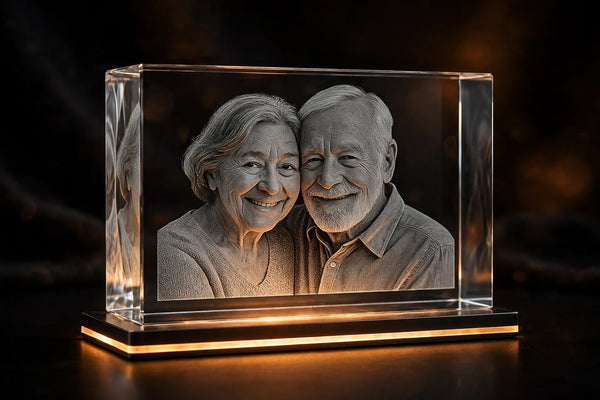
Engraving that ultrasound image in 3D crystal changes the story. It takes the most fragile photograph you'll ever own and turns it into something permanent, luminous, and unmistakably yours — a keepsake that sits on a shelf for decades instead of fading in a drawer. Here's how it works, which scan image to use, and when to order so everything arrives in time for the moments that matter.
Why do ultrasound prints fade so quickly?
It's not your imagination, and it's not poor storage. Ultrasound prints are produced on thermal paper — the same material as old receipts — and the image is created by heat reacting with a chemical coating. That coating keeps reacting long after you leave the clinic.
Here are the plain facts. Thermal ultrasound prints can begin to visibly fade within 2 to 5 years, and the process accelerates with heat, sunlight, and even ordinary handling. Laminating doesn't save them — the chemical reaction continues underneath the laminate, and lamination can actually speed the fading. Photocopying them is barely better, because standard inkjet prints on plain paper also degrade over a decade or two.
This is why digitizing the print is the first urgent step: a high-resolution photo or scan of the ultrasound, taken while the image is still crisp, freezes it as it was. Every year you wait, the source image you have to work from gets softer and grainier. If your print is from a pregnancy a decade ago, photograph it today — not next month. The scan you have right now is the best one you'll ever have.
Which ultrasound image engraves best in 3D crystal?
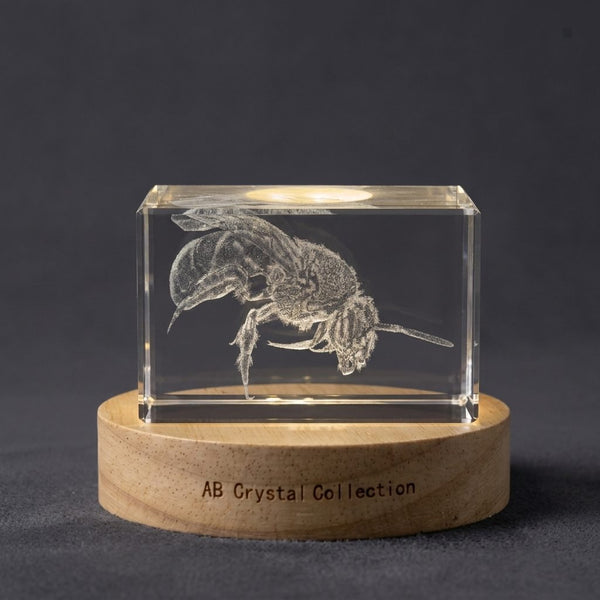
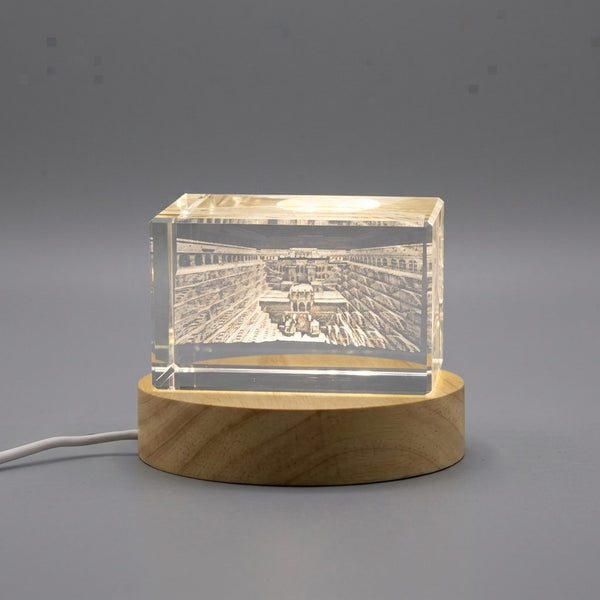
Not every scan image behaves the same once it's translated into a three-dimensional engraving. The 3D engraving process recreates your image as thousands of tiny points suspended inside solid crystal, so the original picture needs strong, readable shapes — the same qualities that make a scan image memorable to your eye.
High-contrast profile shots engrave best in 3D crystal. A clear side view of the baby's face and head, with dark background and bright outline, gives the engraver the most to work with. The classic mid-pregnancy profile — forehead, tiny nose, curled hand near the chin — is the single most popular choice for crystal keepsakes, and it's no coincidence that it's also the image parents choose for the birth announcement.
What to look for in your print: a single, uncluttered subject rather than a busy full-body shot; the face or head clearly separated from surrounding tissue; good contrast between the bright baby shape and the dark background. Measurements, arrows, and clinic text written across the scan don't engrave well, so a clean print without heavy annotation is ideal — most clinics can give you an unannotated copy of the same image if you ask at the time of the scan.
What to avoid: images where the baby is pressed against the uterine wall (the outlines blur together), very dark prints where the whole frame is one muddy grey, or images cropped so tightly that half the face is missing. And remember that the engraver works from your file, not the paper — a well-lit, high-resolution scan of the print matters more than the print itself.

When is the best time to choose your scan?
If you're still early in pregnancy, the single most useful thing to know is that the anatomy scan around 18 to 22 weeks is your best window for a keepsake image. At this stage the baby is large enough to show a clear profile and small enough to fit nicely in the frame — and the sonographer is taking dozens of images anyway, which means you can ask for a clean, high-contrast profile shot to take home.
Practical advice, from parents who've done it: mention at the start of the appointment that you'd love a clear profile photo as a keepsake. Sonographers hear this often and will usually try to capture one between the medical measurements. Ask for the image without text overlays if possible, and request the digital file or a print made the same day — every day the print sits in your bag is a day the thermal paper starts its slow fade.
If your pregnancy is further along, don't worry. Third-trimester scans can produce gorgeous, detailed images — the baby's features are more defined — though the images can be more crowded. And if your child is already born, the print you have is the print you have: digitize it now at high resolution and choose the clearest section of the image for engraving. The best scan for a crystal is the one you can still see clearly.
What exactly does the engraver need from your photo?
This is the part that surprises people with how simple it is. You don't need special software, a particular file format, or any editing skills. All the engraver needs is a clear, high-resolution digital image of your ultrasound print.
The best way to create it: lay the print flat on a dark, non-reflective surface in soft, even daylight — never direct sun. Photograph it straight from above with your phone, filling the frame with the image and keeping the phone perfectly parallel to the print to avoid skew. A flatbed scanner works even better if you have one; scan at 300 DPI or higher and save the result as a JPG or PNG. Either way, check the result at full zoom: if you can see the baby's features crisply on your screen, the engraver can work with it.
Send the file exactly as captured — don't apply filters, don't sharpen it aggressively, and don't try to "clean it up" in an app. The engravers who prepare 3D files work from contrast and depth information, and heavy phone filters destroy exactly the tonal information they need. If your print has faded significantly, mention it when you order; an experienced engraver can often enhance the contrast during the 3D conversion step, but they can't restore detail that has fully disappeared — another reason to digitize sooner rather than later.
Because every ultrasound is different, the actual engraving order is placed as a custom portrait — you upload your scan, choose your crystal, and the piece is made for you alone. If you're wondering where to begin, browse the formats first and pick the one whose shape fits your image.
Is a 3D ultrasound crystal a good baby shower gift?
Honestly, it's one of the rare shower gifts that doesn't duplicate anything on the registry. Diapers get used, clothes get outgrown, and the fifth stuffed animal gets quietly donated. A crystal engraved with the baby's first portrait is the gift that still sits on the mantel when the child starts school — and grandparents consistently tell us it's the gift that made them cry.
The timing works naturally. Around 20 weeks, parents have their anatomy scan and a beautiful profile image — and baby showers typically happen between weeks 28 and 34. That leaves a comfortable window to order, have the crystal engraved, and wrap it for the shower. Order after the anatomy scan and you remove all guesswork about which image to use.
A few gifting scenarios where it shines: the partner who wants to surprise the expectant mother with something no one else thought of; grandparents-to-be, who get a keepsake of the grandchild they haven't met yet; a gender-reveal gathering, where the crystal can be presented alongside the announcement; and siblings or close friends pooling together on one meaningful gift instead of ten small ones. Presentation matters — the crystal arrives ready to display, and many givers add the original print in an envelope alongside it, so the recipient sees the journey from fading paper to permanent crystal.

Can I pair the ultrasound with a newborn photo later?
Yes — and it's one of the most moving things parents do with these keepsakes. The ultrasound crystal becomes chapter one, and once the baby arrives, a second crystal engraved with a newborn portrait becomes chapter two. Displayed side by side — the first hello and the first days — they tell a story no single photograph can.
The practical side is simple: keep your digitized ultrasound file somewhere safe (cloud storage, not just your phone), and when you're ready, order the newborn engraving through the same personalized 3D photo crystal collection. Matching shapes — two rectangles, two hearts — look intentional and beautiful together. Some families add the birth date and name as engraved text beneath the image, which turns the pair into a tiny timeline of the child's beginning.
And if you're reading this with a child who's already past the newborn stage: it's never too late. Parents engrave ultrasound images years later, once they realize the print is fading and the file they wish they'd saved is gone. What matters is starting from the clearest version of the image you have today.
Can any ultrasound image be engraved in 3D crystal?
Almost any, but the results vary. High-contrast profile shots with a clear outline engrave best; crowded or very dark images produce a softer result. If you're unsure about your image, the engraver can assess the file before production — send your clearest scan and ask.
How long does it take to receive the engraved crystal?
Each piece is custom-made from your image, so allow a few weeks from order to delivery, especially if you need it for a specific date like a baby shower. Ordering right after the anatomy scan gives you the most comfortable buffer — shower season rarely sneaks up, but engraving queues can.
Will the baby's name and birth details be included?
Most personalized 3D crystal formats offer optional engraved text — a name, date, or short message — added during the same engraving process. Check the product page for the text options on your chosen shape, and keep the wording short so it stays elegant next to the image.
Is it safe to upload my ultrasound photo online?
Your image is used solely to create your engraving — it's your private family photo, and reputable engravers treat it that way. Upload only through the retailer's own secure ordering page, never through email or social media messages, and keep a copy of your file at home regardless.
Key takeaways
- Thermal ultrasound prints begin fading within 2–5 years — digitize yours at high resolution today, whatever its age.
- High-contrast profile shots engrave best in 3D crystal; clean images without text overlays give the sharpest result.
- The anatomy scan around 18–22 weeks is the ideal moment to capture a keepsake-ready image.
- All the engraver needs is a clear photo or 300-DPI scan of the print — no editing or special software required.
- Custom portrait crystals start from $44.99, made to order from your uploaded scan.
- Order after the anatomy scan and you'll have the crystal in hand well before the baby shower window (weeks 28–34).
That faded print in the drawer was never meant to be the final version of your baby's first portrait. It was a placeholder — a preview of the person you'd meet a few months later. Engraving it in 3D crystal is simply finishing the job the print started: taking the first picture of your child and giving it the permanence it always deserved.
Their first portrait deserves better than a fading print. Browse the full range of 3D crystal gifts and give that ultrasound the forever it was always meant to have.