Open any junk drawer in any house and you'll find the fossil record of a thousand good intentions: a novelty mug, a candle that was never lit, a gift card with three dollars left on it. Every one of them was chosen with care. Every one of them faded into the background within weeks.
Most gifts have a half-life. Flowers are beautiful for about a week. A bottle of wine lasts an evening. Gadgets feel indispensable until the next model arrives, usually within two to three years. None of that makes them bad gifts — it just makes them temporary ones.
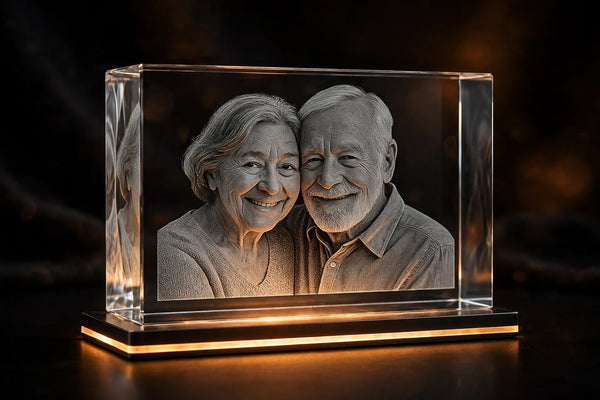
But some occasions aren't temporary. A wedding, a new baby, twenty-five years of marriage, the face of someone you lost — these moments don't expire, so why should the gift that marks them? A 3D engraved crystal captures a moment inside solid glass, permanently. It doesn't wilt, run out, or get replaced. It just stays, glowing softly on a shelf, still saying exactly what it said the day it was given.
This isn't an argument against flowers. It's an argument for matching the gift's lifespan to the moment's weight. Here's how to think about it.
How long does the average gift actually last?
Consider the typical gift-giving arsenal. Cut flowers last about seven days. A box of chocolates is gone by the weekend. A bottle of good wine measures its life in hours, not weeks. Electronics — the default "big" gift — are typically replaced within two to three years as batteries fade and software moves on. Even gift cards, the most practical option of all, are often spent and forgotten within a month.
None of this is a failure of thoughtfulness. A temporary gift is the right tool for a temporary joy: a Tuesday pick-me-up, a hostess gesture, a congratulations that needs warmth more than weight. The problem only appears when the occasion is permanent and the gift isn't — when you want to mark something that will matter in twenty years, and you hand over something that will be gone by spring.
Before choosing, ask one question: will this moment still matter in five years? If the answer is yes, the gift should aim for the same lifespan.
Why does our brain treat lasting objects differently?
Psychologists have a name for it: the endowment effect. We value things more once we own them, and the effect grows stronger the longer we keep them. A gift that survives its first year on the shelf quietly graduates from "a thing I was given" to "a part of my home" — and from there, to a part of the story we tell about our lives.
There is also the simple mechanics of memory. A photo on a phone is seen once and buried under ten thousand others; a physical object on a lit shelf is seen every single day. Visibility is remembrance: what we see, we keep remembering. An object that endures doesn't just survive the occasion — it keeps re-delivering the emotion of it, year after year, without any effort from the giver.
That's the real difference between disposable and lasting gifts. One says "I was thinking of you that day." The other says "I'm still thinking of you."
What makes a 3D crystal different from other keepsakes?
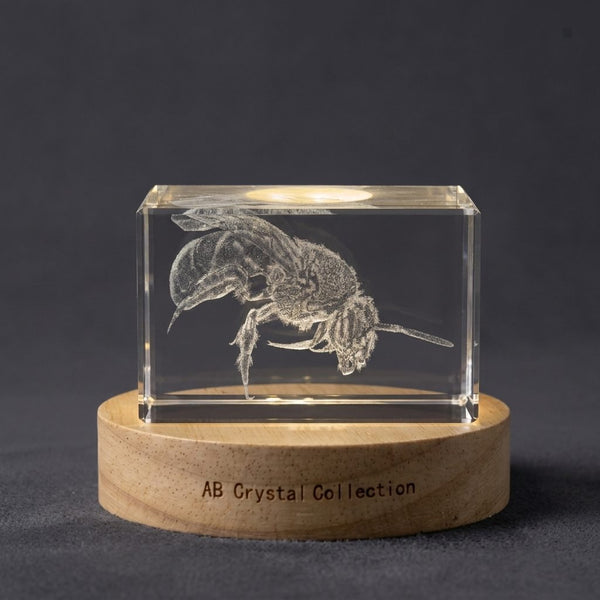
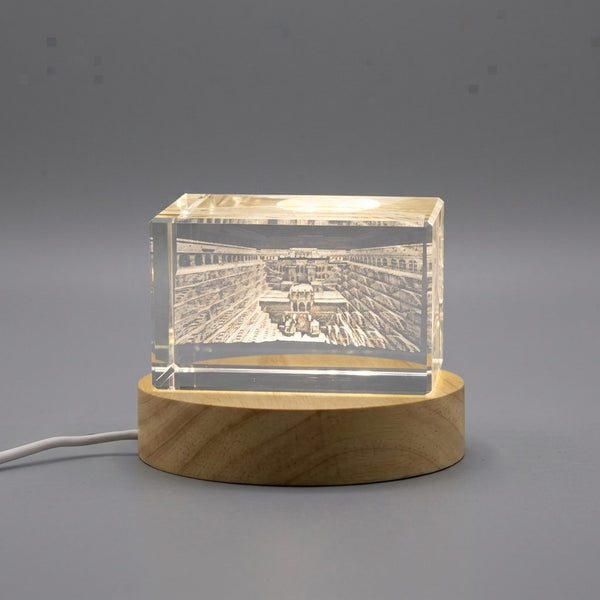
A keepsake only keeps its promise if it actually lasts. Printed photos fade and yellow. Framed pictures need re-framing. Jewelry gets worn, resized, occasionally lost. A 3D crystal engraves the image inside the glass itself — thousands of tiny points burned by laser beneath the surface, forming a portrait that floats within solid crystal.
Because the image lives inside the glass rather than on it, it cannot be scratched off, washed away, or faded by sunlight. The engraving is as permanent as the glass. The crystal itself is K9 optical crystal, chosen for its clarity and weight — it feels substantial in the hand, catches light from a window, and glows softly on an LED base in the evening.
And it is personal in a way a generic "keepsake" can't be: each one is made from your photograph, engraved to order. That means no two are alike. For a fully custom piece, the personalized 3D photo crystal collection turns any meaningful photo — a wedding portrait, a baby's first smile, a grandmother's hands — into a permanent object, from $44.99.

Which occasions deserve permanence — and which don't?
Not every occasion needs a forever gift. A casual birthday, a dinner invitation, a thank-you to a colleague — these call for warmth, not weight, and flowers or wine are perfect. Permanence is for milestones: moments the recipient will still be thinking about in a decade.
The clearest cases: weddings and milestone anniversaries, where the gift should last as long as the marriage aspires to. A new baby, where parents are drowning in disposable everything and will treasure the one thing built to last. Memorials, where permanence is the entire point — a face you can still see, kept exactly as it was. Retirements, graduations, a parent's 70th: the endings and beginnings people replay in their heads for the rest of their lives.
A useful rule of thumb: if people will photograph the moment, the moment deserves a permanent marker. If nobody's taking pictures, flowers will do beautifully. Matching the gift to the milestone isn't about spending more — it's about recognizing which moments were never going to be temporary.
How do I choose the right moment to capture in crystal?
The best crystal portraits come from the best photographs, and the best photographs are the emotionally loaded ones — not necessarily the technically perfect ones. A slightly blurry laugh beats a stiff studio pose every time, because the crystal preserves the feeling, not just the faces.
A few practical guidelines. Choose photos where faces are clear and well-lit, with good contrast between the subject and the background — the laser reads contrast, so a face against a bright window engraves better than a face lost in a dark room. Close-ups and waist-up shots translate best; tiny distant figures in a landscape get lost inside the glass. And pick a moment that already makes you feel something when you look at it — if it moves you on a phone screen, it will move you inside crystal.
Shape matters too. For anniversaries and Valentine's gestures, a heart shape says what words can't. The Large Heart Crystal, at 5 × 4.5 × 2.5 inches, is the classic milestone piece — substantial enough to anchor a shelf, shaped like the sentiment itself. For a softer, frame-like option, the Heart-Shaped Crystal Photo Frame (4 × 3.5 × 2.5 inches) suits anniversaries and memorials alike, holding up to three faces in one engraving.


How do I keep an engraved crystal beautiful for generations?
A gift meant to last should be easy to keep — and crystal is. Because the engraving is sealed inside the glass, there is nothing on the surface to wear off. Ordinary dusting is all the maintenance it needs.
For the occasional deeper clean, a soft microfiber cloth and a little glass cleaner restore the full sparkle in seconds. Avoid abrasive pads or harsh scouring powders — not because the engraving is at risk (it isn't), but because the polished surface deserves the same care as any fine glass. Keep it out of sustained extreme heat, display it where it catches natural light, and on an LED light base it becomes an evening centerpiece that glows for years on end.
Handled this simply, a crystal outlives not just the occasion but the generation that gave it. It becomes the object that gets handed down — the thing on the grandchild's shelf that still says your name.
Frequently asked questions
Is a crystal really a better gift than flowers?
Not always — it depends on the occasion. Flowers are perfect for casual warmth: hostess gestures, get-well wishes, Tuesday pick-me-ups. A crystal is the better choice when the moment is a milestone you'll still care about in five or ten years. Match the gift's lifespan to the moment's weight, and you'll rarely go wrong.
How long does a 3D engraved crystal actually last?
Indefinitely. The image is laser-engraved inside the glass, so it cannot scratch, wash off, or fade in sunlight the way printed photos do. With nothing more than occasional dusting, a K9 crystal keepsake looks the same decades later as the day it arrived.
What kind of photo works best for 3D engraving?
Clear, well-lit faces with good contrast against the background engrave best — the laser reads contrast. Waist-up or close-up shots translate better than tiny distant figures. And emotionally: choose the photo that already makes you feel something. The crystal preserves the feeling, not just the pixels.
Is a heart-shaped crystal appropriate as a memorial gift?
Yes — heart shapes are among the most chosen forms for memorial keepsakes, because they carry tenderness without needing words. A 3D portrait of the person, engraved permanently in crystal, gives the grieving family something to see and hold for years. Pair it with a short handwritten note; keep the gesture quiet and warm.
Key takeaways
- Flowers last about a week, wine an evening, gadgets two to three years — most gifts are temporary by design.
- Ask one question before choosing: will this moment still matter in five years?
- A 3D crystal engraves your photo inside solid K9 glass, where it can't fade, scratch, or wash away.
- Reserve permanent gifts for milestones — weddings, anniversaries, new babies, memorials, retirements.
- Choose photos with clear, well-lit faces and strong contrast; the laser reads contrast.
- Care is simple: microfiber cloth, no abrasives — and it will outlive the generation that gave it.
Most gifts are consumed by the occasion they were bought for. The rare ones outlive it — still on the shelf in twenty years, still glowing in the evening light, still saying exactly what you meant the day you gave it.
Give something they'll still have in twenty years. Browse the full collection and find the moment worth keeping.